
Training Pads for Dogs: Useful or a Waste of Money?
Trendisland.de
Share
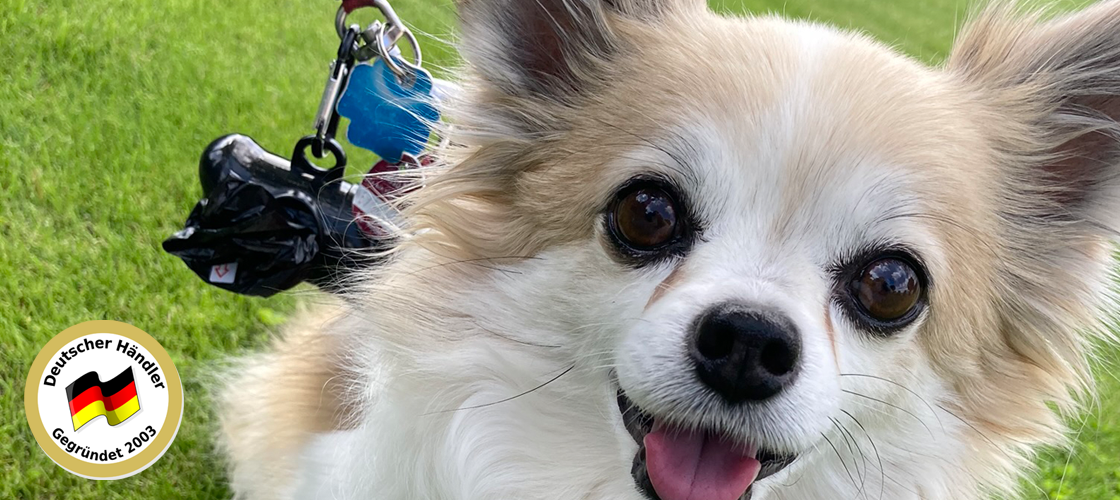
Image created with AI
Dog training pads - really necessary or a waste of money? Training pads for dogs are a hotly debated topic among dog owners. While some swear by these practical helpers, others consider them unnecessary or even counterproductive. But what is really behind these absorbent pads? Are they useful support in dog training or just an expensive waste of money? In this article we get to the bottom of it and look at the pros and cons, alternatives and tips for using them correctly.
Our training pads in the shop
- Training pads 45 × 33 cm, 100 pcs: for puppies and small dogs, approx. 200 ml per pad
- Training pads 45 × 60 cm, 100 pcs: approx. 360 ml per pad
- Training pads 60 × 60 cm, 50 pcs: approx. 500 ml per pad
- Training pads 60 × 90 cm, 50 pcs: for large dogs, approx. 750 ml per pad
View all training pads for dogs. 6 layers with superabsorbent, free shipping in Germany.
What are training pads for dogs?
Training pads - often also called dog toilets, puppy pads or hygiene pads - are multi-layer, absorbent mats meant to give the dog a fixed place to do its business. Their structure is well thought out: a liquid-proof film on the underside prevents leaks, an absorbent core of cellulose and superabsorbent (similar to baby nappies) absorbs large amounts of liquid, and the soft top layer quickly draws moisture inside. At the same time, odour control layers bind unpleasant smells. They are particularly common among puppy owners, people living in flats without a garden or balcony, and with dogs that cannot get outside in time for health reasons.
The different types of training pads
The differences in quality between training pads are considerable, and not every pad suits every purpose. The following table gives an overview:
| Pad type | Absorbency | Odour control | Reusable | Environmental friendliness | Cost factor |
|---|---|---|---|---|---|
| Standard pads | Medium (single use) | Low - simple fragrances | No | Low (disposable, lots of waste) | Low unit price |
| Premium pads | High (multiple use possible) | High - activated carbon or odour killers | No | Medium (lasts longer, still disposable) | Higher unit price |
| Reusable pads | Medium to high | Medium - neutral after washing | Yes (washable) | High (less waste) | Higher purchase price, economical in the long run |
| Pads with attractants | High (often premium-based) | High - combined with an attractant | No | Like premium pads | Higher unit price |
Pros and cons of training pads in dog training
Before deciding for or against training pads, it is worth looking at the arguments on both sides.
Advantages: when do training pads make sense?
- A practical solution for city flats: On high floors without a lift or in bad weather, pads offer a clean, instantly available alternative to going for a walk. They save dog and owner from wet paws and stress at night.
- A helpful transitional solution for puppies: In the first weeks, until vaccination protection is complete or while the little dog cannot hold it long enough, pads structure house training. They create a clear "emergency spot" and help protect carpets and floors.
- Support for sick or older dogs: With incontinence, joint disease or during recovery after surgery, pads are often the only hygienic solution to give the animal a dignified place.
- Useful when travelling: In hotels, holiday flats or on long car journeys, pads provide security and orientation in unfamiliar surroundings.
- Relief for working people: When the gaps between walks are long, a pad can serve as a transitional solution to avoid stress for the dog without it relieving itself where it should not.
Disadvantages: when are training pads problematic?
- Confusion during house training: Some dogs generalise the padded feeling and later also relieve themselves on carpets, towels or soft floors. A clear change of surface is therefore essential.
- Odour build-up: Cheap pads without real odour neutralisation lead to a persistent urine smell over time, which lowers the quality of living and attracts the dog even more.
- Environmental impact: Daily use of disposable pads produces a considerable amount of waste, depending on the size of the dog. The plastic films and superabsorbents they contain are not biodegradable.
- Cost factor: Over several weeks of use, high-quality premium pads quickly cost more than cleaning or an additional dog-walking service. Calculate the running costs beforehand.
House training your dog with a training pad - how it works
For successful training with pads, there are some golden rules recommended by experienced trainers:
- Consistent placement: Choose a fixed, quiet place without through traffic and do not keep changing it. The dog must be able to recognise the spot as its "potty place". A spot near the door you will later use to go out is ideal.
- Praise instead of scolding: Reward every successful use of the pad generously with food, play or your voice. Ignore accidents completely and clean the spot thoroughly with an enzyme cleaner to remove scent traces.
- Establish a routine: Take the dog to the pad after waking up, after eating, after playing and generally every two hours. A cue word such as "go potty" can help to link the action.
- Gradual outdoor training: As soon as the dog uses the pad reliably, move the pad step by step towards the door, then onto the balcony or in front of the front door, and finally outside. That way you transfer what has been learned to the outdoors without abruptly taking away the familiar surface.
- Reduce the pad area gradually: To increase the preference for outdoors, you can gradually reduce the pad area and give the dog more opportunities to relieve itself outside - this makes the transition easier.
Common mistakes in pad training
Many owners unknowingly make mistakes that delay learning success: - Reacting too late to signs such as circling, sniffing or restlessness - the dog then relieves itself next to the pad. - Constantly moving the pads - the dog cannot build an association with the place. - Punishing accidents - this only leads to secret business, e.g. behind the sofa. - Irregular cleaning - dogs avoid heavily soiled pads and look for clean spots.
Alternatives to training pads
For dog owners who do not want to use disposable or reusable pads, there are practical alternatives that may offer more benefits depending on the living situation:
- Grass grids or artificial turf toilets: A system of a tray with real or artificial grass simulates the natural surface. The grass is washable or replaceable and gives the dog the impression of being outside - ideal for a balcony or terrace.
- Dog toilets with a collection tray: These plastic trays have a raised standing surface and a drain or collecting tray. The difference in height signals to the dog the special character of the place; they are easy to clean and durable.
- Scheduled walks with a reward system: Fixed routines at shorter intervals, combined with a clicker or treats, quickly lead to reliable house training in older puppies and adult dogs. A dog or cat flap to a safe outdoor area is the logical next step.
- Indoor dog toilets with odour filters: High-quality complete systems have a cover, an activated carbon filter and in some cases automatic cleaning. They are an investment for long-term use, for example in offices, practices or when the dog is alone during the day.
Frequently asked questions (FAQ) about training pads
Are training pads harmful to house training?
No, not in themselves. What matters is thoughtful use: as a short-term bridge or emergency spot they can help. But if they are used for months as a full replacement for going outside, the dog learns that relieving itself in the home is generally fine. That makes the later transition outside considerably harder.
From what age can puppies be introduced to training pads?
This can start from the eighth week of life, as soon as the puppy moves in. In the first days, close management (crate, puppy pen, constant supervision) is more important than the pad itself anyway. It serves as additional security for the moments when you cannot react in time.
How often should you change a training pad?
Used pads - especially with urine - should be changed after twelve hours at the latest, and immediately after faeces. Premium pads may be left a little longer after a single urination, but for the sake of odour hygiene a daily change or a change after every larger business is advisable. Reusable pads should be washed after every heavier soiling.
Can training pads also be used outdoors?
Yes, when travelling or with puppies who are not yet used to the outside world, a pad on the balcony or a sheltered spot on the terrace can make getting started easier. However, they are not weatherproof and should only be laid out in dry conditions. For permanent outdoor use, artificial turf systems are better suited.
Are there dogs for which pads are less suitable?
Dogs with strong territorial behaviour that tend to mark (often uncastrated males) may see the pad as an invitation to mark more often and in other places. Some hunting dogs or very independent breeds also find it hard to grasp "indoors is okay, but only here".
Conclusion: training pads for dogs - yes or no?
Whether training pads make sense cannot be answered across the board. They are not a must for every dog owner, but in certain situations they are a practical help. For puppies in city flats, for sick animals recovering or for working people with long absences, they can make living together easier. What matters is conscious use: pads should not be seen as a permanent solution but as a transitional aid or a clearly defined emergency option.
If you decide to use pads, invest in high-quality products and rely on consistent training from the start. That way you avoid confusing your dog and unpleasant surprises in your home. Ultimately it depends on your living situation, your dog's character and your training goals - trust your instinct and watch what works best for your four-legged friend.
Note on content creation:
This article was created with the support of AI and then editorially reviewed and expanded. Despite careful preparation, we cannot completely rule out inaccuracies in content or calculations. All information is provided without guarantee of correctness, completeness or timeliness. The article is for general information only and does not replace legal, technical or professional advice. For individual questions or binding information, please contact the relevant authorities or experts.
Images: The cover image was created with AI (AI-generated image). It is for illustration purposes and may differ from the actual product or condition.
You will find all sizes from 45 × 33 cm to 60 × 90 cm in our training pads for dogs category.
To the shop: Training pads for dogs in 4 sizes from 45 × 33 to 60 × 90 cm